
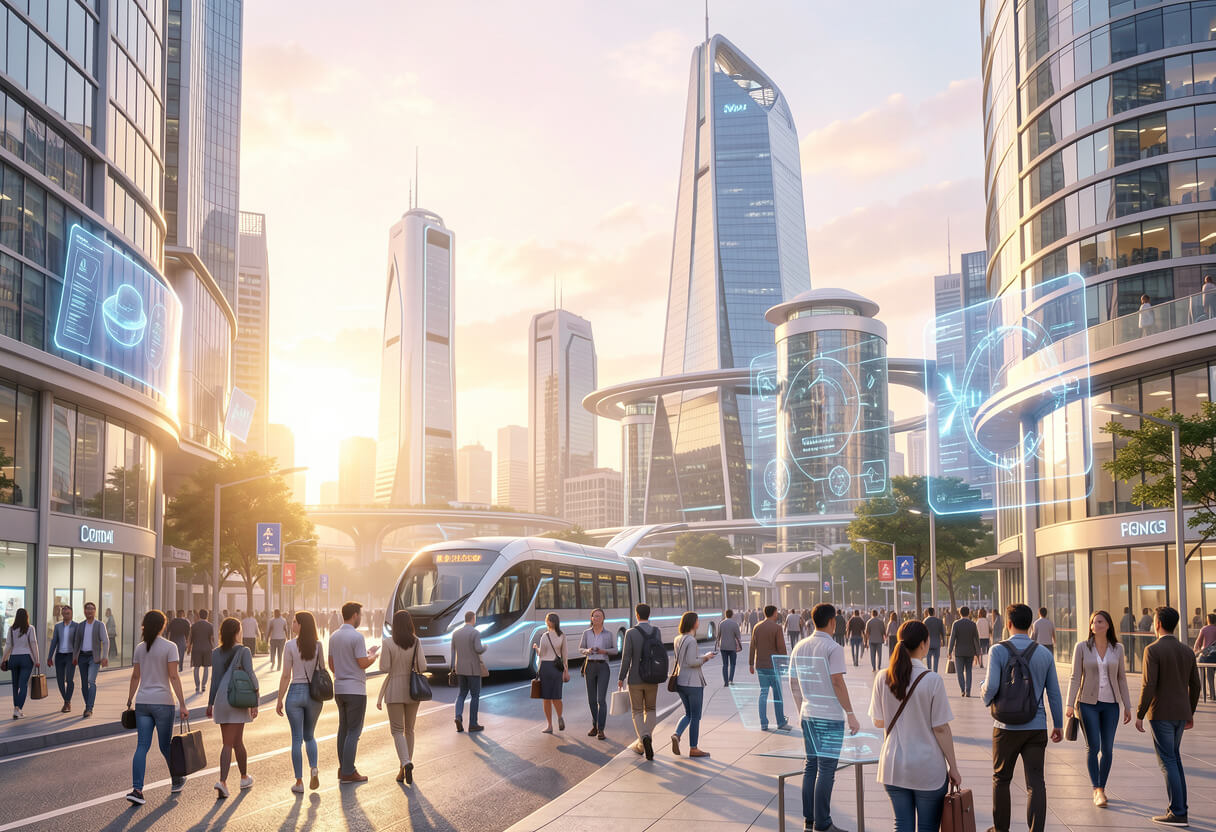
The future of technology is unfolding faster than ever, and artificial intelligence sits at the center of this transformation. In 2026, AI-driven innovations are redefining how societies function, how businesses operate, and how individuals interact with the digital world. These emerging technologies promise not only efficiency and automation but also new ways of solving global challenges.
Smart Cities and Connected Living
One of the most visible innovations is the rise of smart cities. AI systems manage traffic flow, energy consumption, waste management, and public safety in real time. Sensors and intelligent analytics enable cities to respond dynamically to changing conditions, reducing congestion and pollution while improving quality of life.
Smart homes are also becoming more advanced. AI-powered assistants learn user preferences, optimize energy use, and enhance security. These systems create living environments that are both comfortable and sustainable.
Autonomous Technologies
Autonomous systems represent another major leap forward. Self-driving vehicles are becoming safer and more reliable, using AI to process visual data, predict hazards, and make split-second decisions. Beyond transportation, autonomous drones assist in agriculture, logistics, and emergency response.
In factories and warehouses, autonomous robots collaborate with human workers, handling repetitive or dangerous tasks. This improves productivity while reducing workplace injuries.
AI in Healthcare Innovation
Healthcare innovation is accelerating due to AI. Predictive analytics identify health risks early, enabling preventive care. AI-driven diagnostics analyze medical images and patient data with remarkable accuracy, supporting doctors in making informed decisions.
Personalized medicine is also advancing. AI models analyze genetic information to recommend tailored treatments, improving outcomes and reducing side effects. These innovations make healthcare more efficient, accessible, and patient-centered.
Generative AI and Creativity
Generative AI is reshaping creativity and design. Artists, engineers, and creators use AI to generate concepts, prototypes, music, and visual content. These tools enable rapid experimentation and open new possibilities for innovation.
In product development, generative AI accelerates design cycles by exploring thousands of variations quickly. This reduces costs and fosters creativity across industries.
Ethical and Social Challenges
As future technologies evolve, ethical considerations become increasingly important. Issues such as data privacy, algorithmic bias, and job displacement require thoughtful solutions. Policymakers, developers, and businesses must collaborate to ensure AI benefits society as a whole.
Transparent governance, responsible innovation, and public education are essential for building trust in emerging technologies.
Looking Ahead
The next decade will see AI become more integrated, intelligent, and human-centered. Multi-modal AI systems that understand text, images, audio, and video simultaneously will enable richer interactions. AI will support humans in addressing complex challenges such as climate change, resource management, and disaster response.
Rather than replacing humans, future AI technologies will amplify human potential, enabling smarter decisions and creative breakthroughs.
Conclusion
Future tech and AI innovations are shaping a world that is more connected, efficient, and intelligent. From smart cities and autonomous systems to healthcare breakthroughs and creative tools, AI is driving transformative change. By embracing these technologies responsibly, society can build a future that balances innovation with ethics and sustainability.