
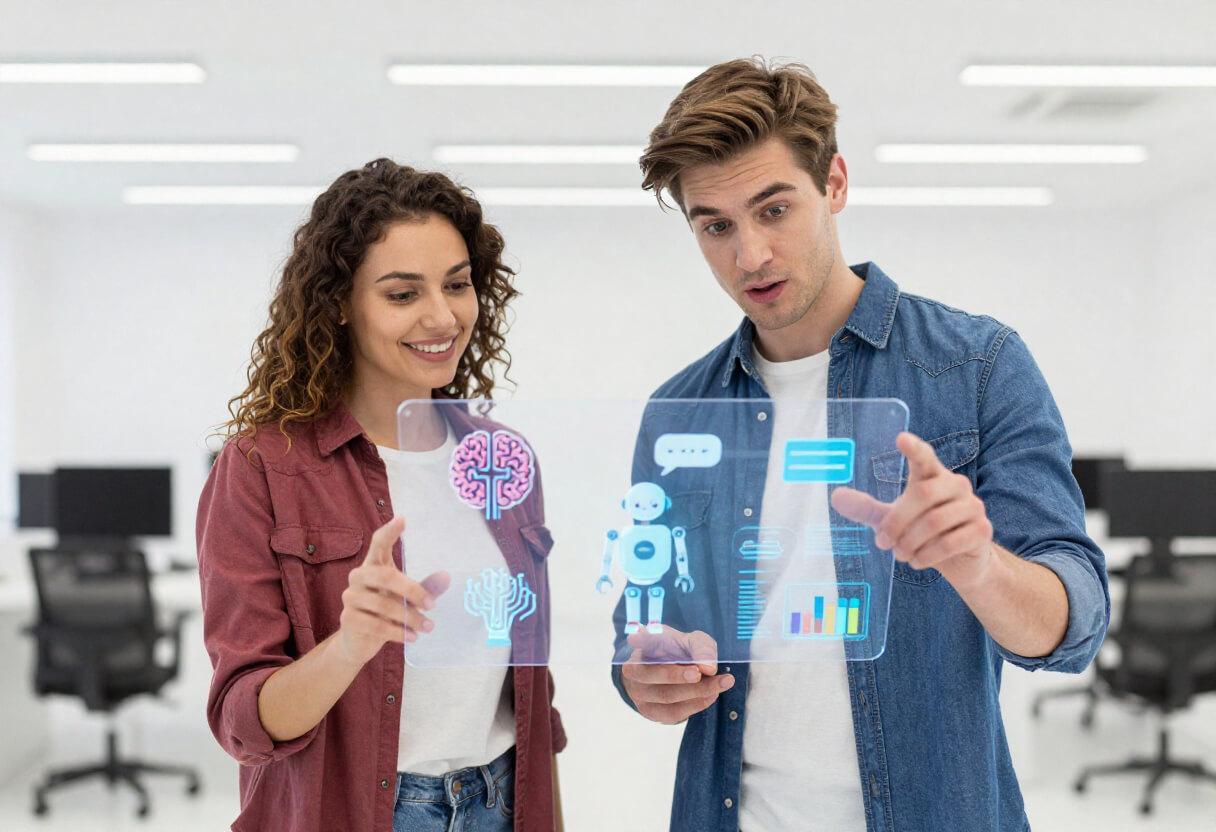
Artificial Intelligence, commonly known as AI, has become one of the most talked-about technologies in the world. In 2026, AI is no longer limited to research labs or science fiction movies—it is part of everyday life. From smartphones and social media to healthcare and business, AI systems quietly work behind the scenes to make processes smarter, faster, and more efficient.
Understanding Artificial Intelligence
At its core, Artificial Intelligence refers to machines or software designed to mimic human intelligence. This includes the ability to learn from data, recognize patterns, make decisions, and improve over time. Unlike traditional software that follows fixed rules, AI systems adapt based on experience and data input.
There are two main types of AI:
-
Narrow AI: Designed for specific tasks such as voice assistants, recommendation systems, or image recognition.
-
General AI: A theoretical concept where machines possess human-like intelligence across multiple domains. As of 2026, this remains a long-term goal rather than reality.
Most AI applications today fall under Narrow AI, yet they are powerful enough to transform entire industries.
How AI Works
AI systems rely on data, algorithms, and computing power. Data is the foundation—AI learns by analyzing large amounts of information. Algorithms are mathematical models that process this data and identify patterns. Advanced hardware, such as GPUs and cloud computing platforms, allows AI to perform complex calculations efficiently.
Machine learning, a subset of AI, enables systems to learn from data without explicit programming. Deep learning, inspired by the human brain, uses neural networks to handle complex tasks like image recognition, language translation, and speech processing.
Everyday Uses of AI
AI is deeply embedded in daily life, often without users realizing it. Examples include:
-
Smartphones: Face recognition, voice assistants, and camera enhancements
-
Social Media: Content recommendations, ad targeting, and moderation
-
Online Shopping: Personalized product suggestions and dynamic pricing
-
Navigation Apps: Traffic prediction and route optimization
These applications demonstrate how AI improves convenience, personalization, and efficiency.
AI in Major Industries
Beyond personal use, AI plays a critical role in major sectors:
-
Healthcare: AI assists in diagnosing diseases, analyzing medical images, and predicting patient outcomes.
-
Finance: Banks use AI for fraud detection, risk analysis, and automated trading.
-
Education: Personalized learning platforms adapt content to individual students’ needs.
-
Manufacturing: AI-driven robots and predictive maintenance systems increase productivity and reduce downtime.
AI’s ability to process vast amounts of data quickly makes it invaluable in complex environments.
Benefits and Limitations
AI offers numerous benefits, including speed, accuracy, scalability, and automation. It reduces human error and enables insights that would be impossible to achieve manually.
However, AI also has limitations. It depends heavily on data quality, can inherit bias from training data, and lacks human judgment and emotional understanding. Ethical concerns such as privacy, transparency, and accountability must be carefully managed.
The Future of AI
Looking ahead, AI will become more integrated, intelligent, and accessible. Multi-modal AI systems capable of understanding text, images, audio, and video simultaneously are becoming standard. AI will continue to support human decision-making rather than replace it, acting as a powerful assistant across industries.
Governments and organizations are also developing ethical frameworks to ensure responsible AI usage. As awareness grows, users will demand transparency and fairness in AI-driven systems.
Conclusion
Artificial Intelligence is shaping the present and future of technology. Understanding its basics is essential for anyone interested in modern innovation. From simple recommendation systems to advanced healthcare solutions, AI is transforming how we live and work. By learning how AI functions and where it is applied, beginners can better appreciate its potential and prepare for a future driven by intelligent systems.