
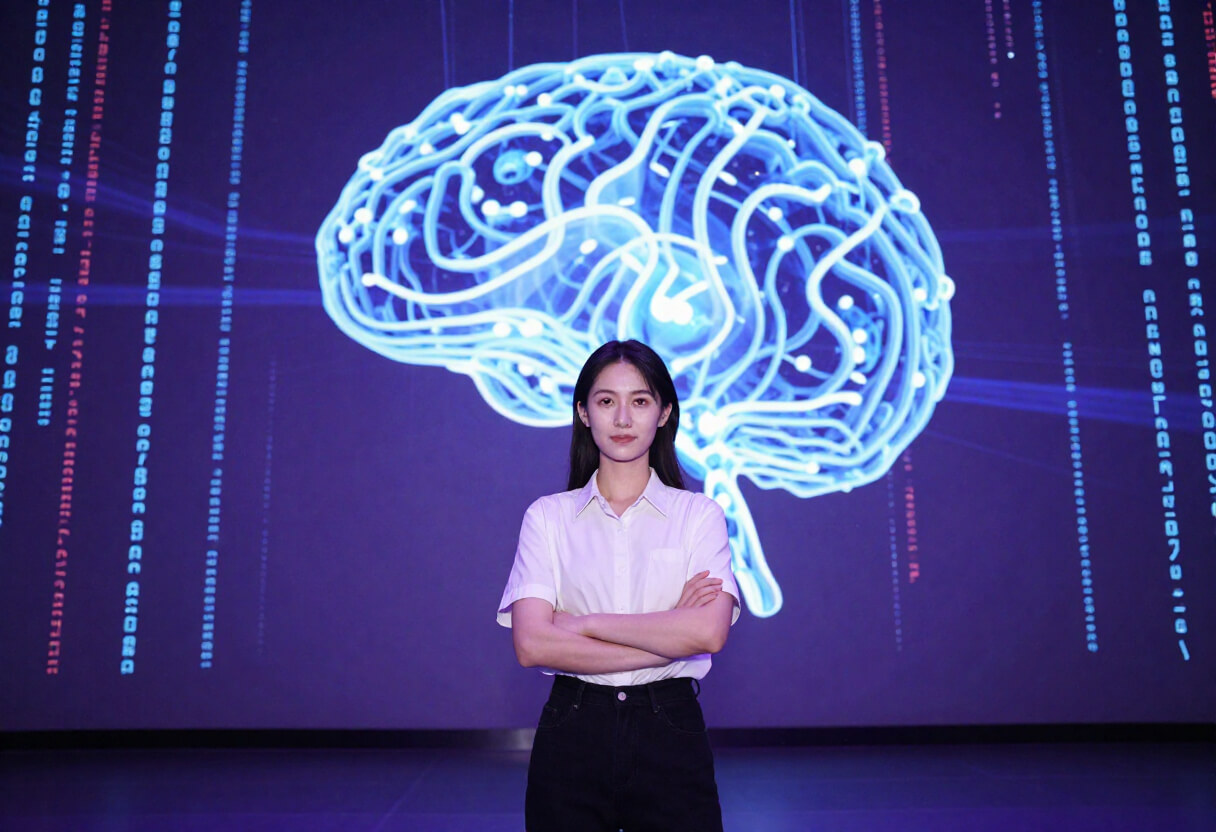
Machine learning and deep learning are two of the most powerful branches of artificial intelligence. In 2026, these technologies drive everything from voice assistants and recommendation engines to self-driving vehicles and medical diagnostics. While the terms are often used interchangeably, they represent different levels of AI capability and complexity.
What Is Machine Learning?
Machine learning is a method that allows computers to learn from data without being explicitly programmed. Instead of following fixed rules, machine learning systems identify patterns in data and improve their performance over time.
For example, a spam filter learns to identify unwanted emails by analyzing thousands of examples. The more data it processes, the more accurate it becomes. Common machine learning approaches include supervised learning, unsupervised learning, and reinforcement learning.
What Is Deep Learning?
Deep learning is a specialized subset of machine learning inspired by the human brain. It uses artificial neural networks with multiple layers to process complex data. Each layer extracts increasingly detailed features, enabling the system to recognize images, understand speech, or translate languages.
Deep learning excels at handling unstructured data such as images, audio, and text. This is why it powers facial recognition, speech assistants, and generative AI systems.
Key Differences Between Machine Learning and Deep Learning
While related, machine learning and deep learning differ in several ways:
-
Data Requirements: Deep learning typically requires much larger datasets.
-
Complexity: Deep learning models are more complex and computationally intensive.
-
Feature Engineering: Machine learning often relies on manual feature selection, while deep learning learns features automatically.
-
Performance: Deep learning usually achieves higher accuracy for complex tasks.
Both approaches are valuable, and the choice depends on the problem being solved.
Real-World Applications
Machine learning and deep learning are widely used across industries:
-
Healthcare: Detecting diseases, analyzing medical images, and predicting patient risks.
-
Finance: Fraud detection, credit scoring, and market forecasting.
-
Retail: Recommendation systems, demand forecasting, and dynamic pricing.
-
Transportation: Self-driving cars, traffic prediction, and route optimization.
These technologies help organizations make smarter, data-driven decisions at scale.
Challenges and Limitations
Despite their power, machine learning and deep learning face challenges. High-quality data is essential, and biased or incomplete datasets can lead to inaccurate outcomes. Deep learning models also require significant computing resources, making them expensive to train and maintain.
Another challenge is explainability. Many deep learning systems operate as “black boxes,” making it difficult to understand how decisions are made. This raises concerns in sensitive areas such as healthcare and finance.
Trends in 2026
Several trends are shaping machine learning and deep learning in 2026:
-
Self-Supervised Learning: Reduces dependency on labeled data.
-
Federated Learning: Enables privacy-preserving training across decentralized data.
-
Explainable AI: Improves transparency and trust in AI systems.
-
Edge AI: Brings intelligence closer to devices for faster responses.
These advancements make AI systems more efficient, secure, and trustworthy.
The Road Ahead
Machine learning and deep learning will continue to evolve, becoming more accessible and integrated into everyday tools. Rather than replacing humans, these systems enhance human capabilities by processing vast amounts of information quickly and accurately.
As adoption grows, ethical considerations such as fairness, transparency, and accountability will become increasingly important. Responsible development ensures these technologies benefit society as a whole.
Conclusion
Machine learning and deep learning form the foundation of modern AI. By enabling systems to learn, adapt, and improve, they power intelligent applications across industries. Understanding these technologies helps readers appreciate how AI works behind the scenes and prepares them for a future driven by data and intelligent systems.